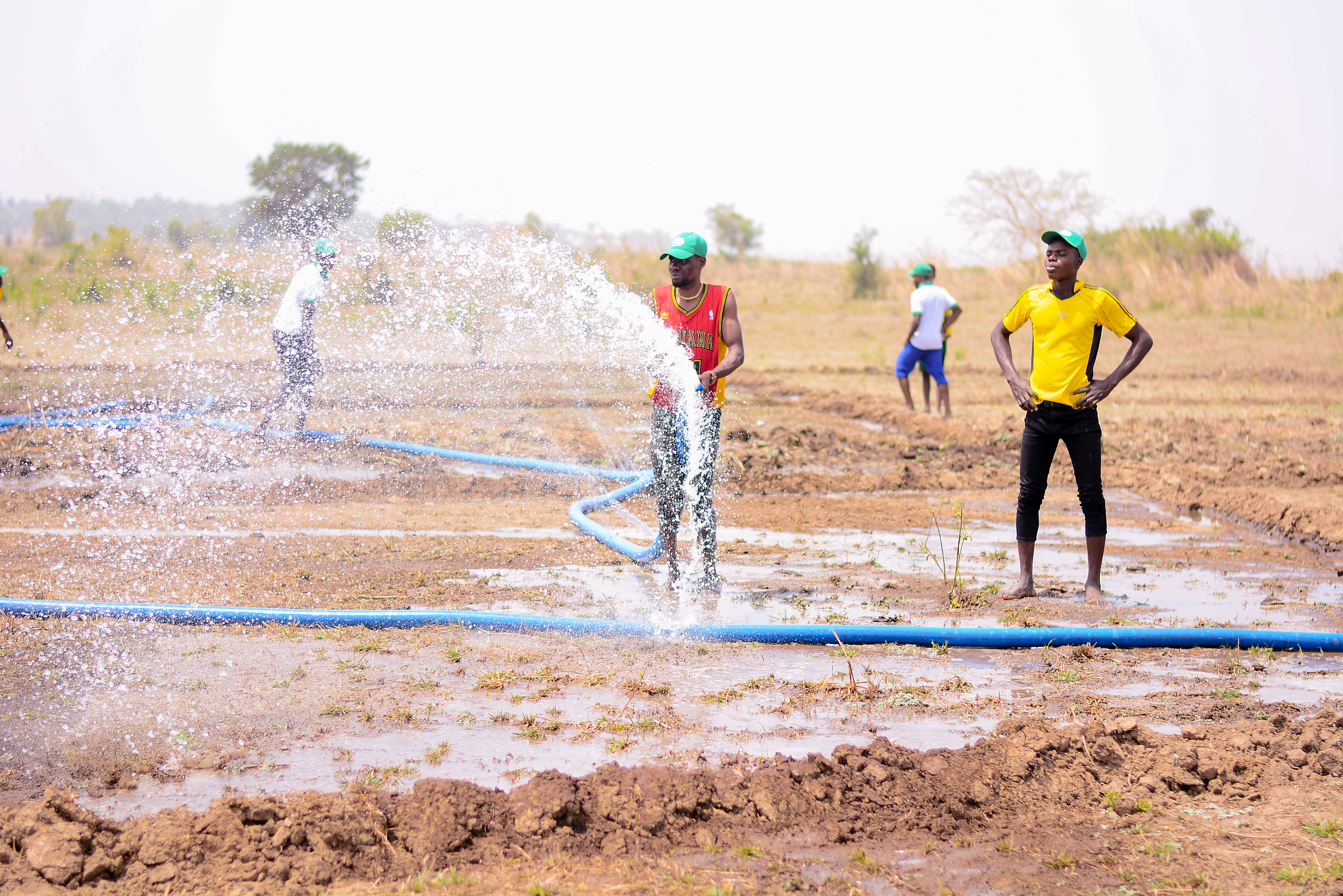
Since the beginning of the 21st Century, conflict between farmers and the pastoralist Fulani, traditional cattle herders whose herds have grazed in the semi-arid region for centuries, has steadily increased. With the changing ecology and security environment since the colonial period, herders have moved South to exploit the rich grazing offered by the higher rainfall zones. This changed migration pattern is linked to a dramatic rise in resource conflicts, which have become more numerous, widespread, and violent. One of the main drivers of these changing migration patters is climate change. One of the most pressing contemporary issues in Nigeria and across the world, climate change poses an increasingly existential risk for human societies and for life on Earth. As the impacts of climate change become more severe, one fear is that conflicts could be triggered or exacerbated by increased competition for diminishing natural resources.
SPRiNG is well-positioned to provide scientifically and practically informed analysis of the linkages between climate change and conflict. Drawing on extensive field research and climate-integrated project interventions, the programme tests climate-conflict pathway hypotheses and examines whether increased climate adaptation, ecological restoration, and more productive and integrated livelihoods can reduce violence. See our focus areas below for more information on how SPRiNG is working to reduce conflict and violence linked to loss of natural resources.
Providing agricultural and pastoral communities with new information, knowledge, skills, inputs, tools and other vital resources required for the adoption of sustainable NRM practices in the contexts of conflicts, economic crisis and climate change, coupled with communities collaboratively undertaking participatory land use mapping and increasingly adopting more sustainable NRM production systems, will lead to agricultural and pastoral communities adopting better conflict, economic and climate change related coping mechanisms and increasingly avoid practices that exacerbate environmental degradation and natural resource depletion.
This will result in increased resilience to climate change and more sustainable usage and management of natural resources, leading to reduced incentives and incidents of violence linked to natural resources.
If new information, knowledge, skills and other vital incentives are provided to governmental, civil society organizations and private sector partners mandated with providing extension services to agricultural and pastoral communities, and these actors increasingly offer improved and readily available services to agricultural and pastoral communities; this will result in communities increasingly adopting more climate sensitive, ecologically sustainable, and collaborative production systems.
This would help regenerate soils and biodiversity, reduce competition over land and water and contribute to a reduction of incentives among farmers and herders to resort to violence as a means of resolving conflict.
If institutions responsible for initiating, delivering and sustaining responses to climate variability and climate change are strengthened through provision of information, knowledge, skills, networks and other vital resources, and targeted institutions increasingly harness capacity building support to undertake interventions in communities to improve the ecological sustainability of livelihoods, reduce deforestation rates and environmental degradation, and increase resilience to climate change; then the public would be better informed and equipped to cope with the vagaries of climate variability and climate change.
There would be reduced recourse to harmful practices that degrade the environment and exacerbate conflict. This would lead to reduced incentives for individuals and groups to resort to violence, thereby leading to reduced incidents of violence.
We know that change happens when we work together. Join our mailing list for updates on the latest SPRiNG research, initiatives and events.
Adding {{itemName}} to cart
Added {{itemName}} to cart