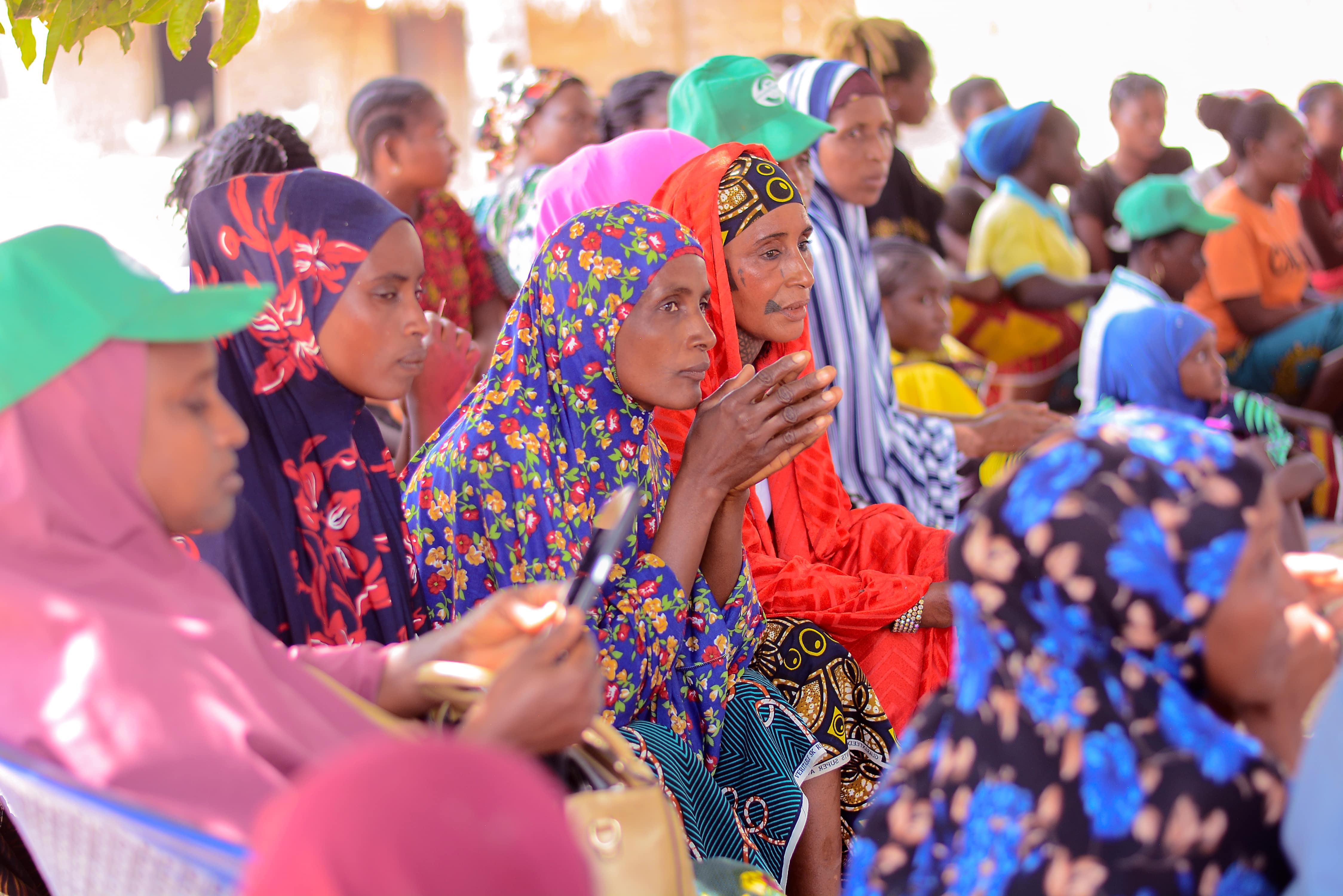
Pervasive gender disparities in Nigeria results in limited access to resources, education, economic independence, and decision-making for women and girls. This results in widespread exclusion from formal peace processes and community leadership. The prevalence of sexual and gender-based violence (SGBV) in conflict settings also undermines the safety of women and girls, compromising their wellbeing. These barriers prevent women and girls from making crucial contributions to conflict resolution, keeping inclusive and sustainable peace out of reach.
Nigeria SPRiNG works to break down these barriers, empowering women and girls to take on greater roles in peacebuilding and policy, and helping institutions develop safer and more welcoming environments for women and girls. See below for further information on SPRiNG's specific focus areas.
Providing support for stakeholders engaged in public sensitization on the benefits women's participation in peacebuilding processes and decision making. Ensuring government agencies and civil society organizations are supported to sustain advocacy for adoption and implementation of State Action Plans and Local Action Plans.
By providing this support, SPRiNG secures the increased and meaningful participation and influence of women in peacebuilding processes. This helps contribute to reduced incentives for groups deploying violence for conflict resolution leading to an overall reduction in incidents of violence.
Supporting government agencies and civil society organisations to raise awareness and take action on the risks, trends and existing responses to conflict-related sexual violence (CRSV) and sexual and gender based violence (SGBV), and supporting government agencies and civil society organizations to improve their capacity to deliver comprehensive care and compassionately respond to survivors of CRSV/SGBV.
These interventions will help increase the conviction rate of offenders, and decrease stigmatization, helping improve the recovery and resilience of survivors. This would contribute to reduced incidents of CRSV/SGBV leading to reduced violence in response to cases of CRSV/SGBV.
Women from marginalised communities are disproportionately impacted by violent conflict, economic crisis and climate change. Supporting marginalised women to acquire literacy skills and credit facilities, increasing women's access to alternative livelihoods to earn incomes will improve women's resilience in the face of violent conflict, economic crisis and climate change.
The multiplied stabilising effects of enhanced women empowerment and resilience would contribute to reduced incidents of violence and enhanced resilience of women to the negative impacts of climate change on their livelihoods.
We know that change happens when we work together. Join our mailing list for updates on the latest SPRiNG research, initiatives and events.
Adding {{itemName}} to cart
Added {{itemName}} to cart